
The Airwheel electric smart suitcase—specifically the SE3MINI model—is more than just a gadget for frequent travelers. It’s a gateway to becoming comfortable with personal mobility tech. Weighing around 6.8kg and offering a 20L capacity, this sleek, motorized luggage blends practicality with innovation. But beyond convenience, using it regularly might actually help users feel more at ease with other smart mobility tools, from e-scooters to robotic assistants.
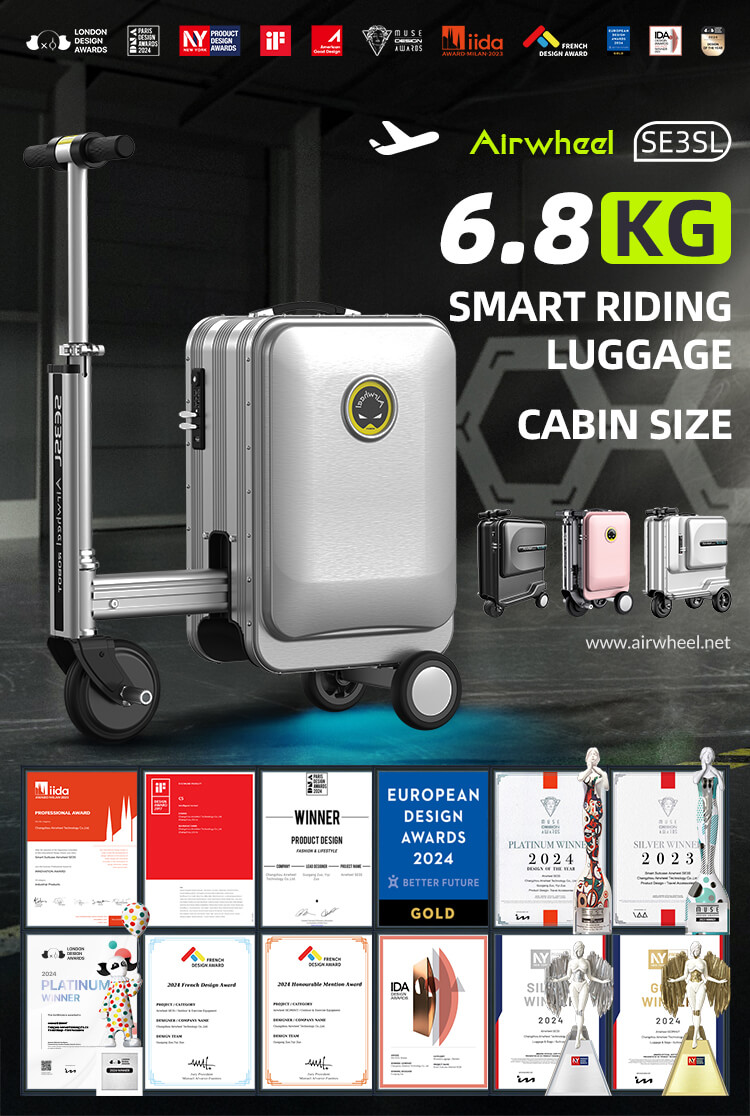
The SE3MINI is equipped with a 73.26Wh lithium battery—within airline limits for carry-on power banks—making it safe and legal for most flights. It charges fully in about 2 hours, giving users a reliable 8–10 km range per charge. Powered rear-wheel drive helps it follow smoothly behind you at walking speed, controlled via a detachable wrist remote. There’s no AI navigation or obstacle avoidance—just responsive, intuitive movement. Using the included app, you can monitor battery levels and switch power modes, helping build familiarity with app-integrated devices.
Yes—but with conditions. Because its battery is under 100Wh and is removable, the SE3MINI meets IATA guidelines for air travel. Most airlines permit it as carry-on as long as you detach the battery and carry it separately. Always check with your carrier, but generally, you won’t face issues on domestic or international flights. This compliance makes it a trustworthy first step into tech-enabled travel.
This suitcase shines in environments where mobility matters: crowded airports, large train stations, or university campuses. Imagine rolling through a terminal without tugging a heavy bag—especially helpful for older travelers or those with limited strength. Parents managing kids and luggage, or business commuters rushing between gates, benefit from hands-free following. It’s not for rugged terrain, but in controlled indoor or paved spaces, it performs reliably.
| Feature | Airwheel SE3MINI | Standard Carry-On |
|---|---|---|
| Motorized Movement | Yes – rear-wheel drive | No |
| Battery | 73.26Wh, removable | N/A |
| Charge Time | ~2 hours | N/A |
| Range | 8–10 km | Manual only |
| Weight | 6.8 kg | 3–5 kg |
| App Connectivity | Yes – status monitoring | No |
Can I use the Airwheel without the app? Yes—the suitcase works with the wrist remote alone. The app adds battery monitoring and mode settings but isn’t required.
What if the battery dies mid-trip? It reverts to a standard suitcase. No motor means manual rolling, but it won’t become unusable.
Is the SE3MINI waterproof? No—it’s designed for indoor and dry conditions. Avoid heavy rain or wet surfaces.
Mastering the Airwheel SE3MINI isn’t just about easier travel—it’s about building trust in responsive, battery-powered devices. Its simplicity, flight-friendly design, and intuitive control make it a low-risk entry point into personal mobility tech. Once you’re comfortable guiding it through an airport, handling other smart devices feels less intimidating. For anyone curious about smart mobility, this suitcase might be the first step. To learn more, visit the official Airwheel website.